
Best Prop Firms in 2026: Reviews, Rules, Fees & Profit Splits
- dpaulplumbingcalifornia@gmail.com
- September 19, 2026
Table of Contents
Overview
Choosing the right prop firm in 2026 depends on more than just the advertised profit split. Traders should consider evaluation fees, account sizes, trading rules, drawdown limits, payout policies, challenge conditions, and available trading options before making a decision.
In this guide, we compare the best prop firms in 2026 across key factors including fees, rules, profit splits, payouts, and account options. Whether you’re comparing firms for your first challenge or looking for a different funding model, this overview will help you understand what to check before choosing a prop firm.
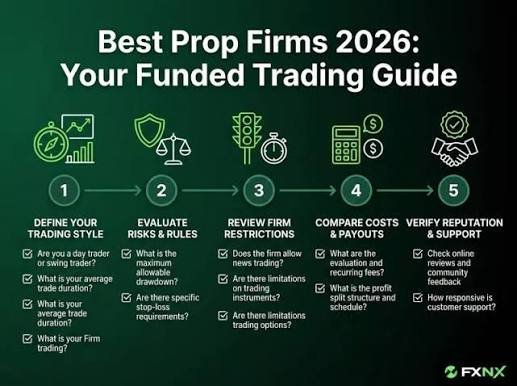
Best Prop Firms in 2026: What Traders Should Know
Prop firms have become a popular option for traders who want to trade with a larger account without providing the entire trading capital themselves. Instead of simply looking at the size of the funded account, traders need to understand how each firm’s evaluation process, trading rules, fees, drawdown limits, profit-sharing structure, and payout conditions work.
The prop firm industry includes different types of funding programs, and the conditions can vary considerably from one provider to another. Some firms focus on traditional evaluation challenges, while others offer different account models, trading conditions, or ways to qualify for funding. Because of these differences, choosing a prop firm should involve more than comparing the advertised account size or maximum profit split.
When comparing the best prop firms in 2026, one of the first things to examine is the evaluation fee. The initial cost can differ depending on the account size and program selected. However, a lower entry fee does not necessarily mean that a program will be suitable for every trader. The evaluation rules, maximum drawdown, daily loss limits, trading restrictions, and other conditions can have an equally important impact on the overall experience.
Best Prop Firms in 2026: What Traders Should Know
Every prop firm can structure its funding program differently. Traders may encounter different account sizes, evaluation stages, profit targets, minimum trading days, drawdown models, and payout requirements. Some programs may also have specific rules related to news trading, overnight positions, weekend holding, automated trading, or other trading activities.
Profit split is another important factor that attracts traders to funded accounts. A higher advertised profit split may look appealing, but it should always be considered alongside the firm’s other conditions. Traders should understand when profits can be withdrawn, whether there are minimum requirements for payouts, and what rules apply after receiving a funded account.
Risk management is equally important. Drawdown rules determine how much a trader can lose before an account is breached, and different firms may calculate these limits in different ways. Understanding whether a firm uses daily drawdown, maximum drawdown, static limits, or other models can help traders better understand the risk involved in a particular program.
Frequently Asked Questions
1. What is a prop firm coupon code?
A prop firm coupon code is a promotional code that may reduce the cost of a trading evaluation, challenge, or other eligible purchase. The discount, eligible products, and expiry date depend on the individual prop firm.
2. How can I find active prop firm coupon codes?
You can check our latest coupon and promo code pages, where we publish available offers and explain how to apply them. Always verify the discount and terms on the prop firm’s checkout page before completing your purchase.
3. Do prop firm coupon codes expire?
Yes. Some coupon codes have an expiry date, while others may be discontinued or changed without notice. Because offers can change, it’s a good idea to verify the code at checkout before relying on a specific discount.
4. Can I use more than one coupon code on a prop firm purchase?
Usually, only one promotional code can be applied to an eligible order, but this depends on the prop firm’s terms. Check the firm’s checkout rules to confirm whether multiple promotions can be combined.
5. Are prop firm coupon codes available for all account sizes?
Not necessarily. A coupon may apply only to selected account sizes, challenge types, or specific plans. Before purchasing, check the coupon’s terms and the prop firm’s current pricing and eligibility requirements.
Best Prop Firms in 2026
Compare prop firms, trading rules, fees, challenges and profit splits.